Information Hub

Explore our articles, FAQs, research, and media coverage

Frequently Asked Questions

Welcome to our FAQ section, where we address the most common questions and concerns about bariatric and metabolic surgery. Whether you’re considering surgery, preparing for your procedure, or navigating your recovery, we aim to provide clear and concise answers to help you make informed decisions.

What is Weight loss / Bariatric Surgery ?

Weight loss surgery or Bariatric Surgery refers to Internal operations in body carried out on Stomach or Intestine aimed at reducing weight in severely obese individual. Today these Operations have expanded in to “Metabolic” Surgery or disease controlling surgery as well. This means that “Not so obese” patients with obesity associated illnesses like Diabetes are offered these operations with the aim of controlling their disease than reducing weight. Today these operations are done world wide; and in Sri Lanka as Laparoscopic (Key hole) Operations.

Bariatric Surgery is entirely different to External fat reduction operations (Plastic Surgeries) like abdomino-plasties and liposuctions; which deal with removal of excess fat deposited on body surfaces. Bariatric Surgery leads to reduction of external and internal fat rapidly and permanently enabling most patients to achieve their ideal body weight in 1-2 years after surgery.

Are you a candidate for bariatric Surgery ?
In adults the globally accepted measurement to assess suitability for Bariatric Surgery is Body Mass Index (BMI). This is calculated by dividing an individuals body weight (in Kg) by the square of the individual’s height (In Meters)
 
A normal Healthy adult should be in the BMI range of 19-25 kg/m2 From BMI 25-29 – Categorized as Over weight From BMI 30-34 – Class 1 obesity From BMI 35-39 – Class 2 Obesity From BMI 40 and above Class 3 obesity or Morbid Obesity (In Asia this figure is set at BMI 37)

The present criteria for obesity Surgery in Asia are Body Mass Index (BMI) more than 37 or BMI over 32 with obesity associated illnesses like uncontrolled Diabetes, Hypertension, Fatty Liver disease, Obstructive sleep apnoea and Subfertility. In older age groups obesity associated severe mechanical joint pains in knees , ankles , hips and Back which severly restricts mobility; by itself is a valid reason to consider bariatric Surgery. In Sri Lanka we offer Bariatric Surgery to morbidly obese individuals from 14 years to 65 years of age.

Calculate your BMI below

Your BMI is

Why should you consider Bariatric Surgery?
When You fall in to the class 3 obesity category the chances of loosing adequate excess weight and remain long term at a normal BMI is less than 5%. Temporary weight losses by enforced dieting would give a maximum transient weight loss of around 10%, but will reach a higher weight than the starting weight when the determination for strict control of food intake weans off. This well recognized phenomenon seen in morbid obese people attempting weight loss by dieting is called “rebound weight gain”.
 
Medication and other therapies also can reduce excess weight by 6-7% which is inadequate at Class 3 obesity and is effective only while the patient is on treatment.
  It is clinically and scientifically proven beyond any doubt that Bariatric / Obesity Surgery is the ONLY EFFECTIVE long term treatment option currently available to treat morbid obesity with over 90% of patients managing to reach and maintain their weight loss targets long term world wide. These are the same results that we have observed in analyzing data of more than 100 Laparoscopic bariatric surgical procedures performed by my team in Sri Lanka.
Negative / side effects of Bariatric Surgery
Like any operation done inside the abdomen these operations also carry the possibility of Surgical and Anesthetic complications in the immediate post operative period and long term nutritional complications if not followed up properly after surgery.
Today with the advanced highly refined techniques the overall chance of developing a serious surgical complication is 2-3% and the chance of Death after surgery is 0.5%-2%(which mainly depends on the status of your health at time of surgery than the adverse event). It is emphasized that these figures are on par with ANY other non bariatric operation carried out in a normal sized individual involving intestine and stomach.
A detailed discussion on specific surgery related complications will be discussed with the individual patient and the spouse or Guardian after the exact type of operation is decided.
Limitations to undergo Bariatric Surgery - When we will say NO!
Today in Sri Lankan Guidelines (College of Endocrinology Guidelines) we are allowed to operate suitable patients from ages 14 up to 65 years. Having other diseases is NOT a contraindication for surgery and in fact as mentioned above it is a very important indication to undergo bariatric surgery. This is because with the weight loss most of the associated illnesses either get cured or well controlled within 2 years post surgery.
We sometimes have to refuse Surgery due to “Unacceptably high risk ” of Anesthesia in some patients where Heart and Lung functions are significantly impaired due to Severe neglected obesity over long time period.
Patients who have had major open abdominal operations may sometimes not be suitable for key hole surgery. However, our team has successfully performed keyhole bariatric surgical procedures on patients who have had several open abdominal operations before. Revision Surgery (Re-doing bariatric surgery due to failure of initial operation) may be associated with higher surgical complications.

Common Misconceptions about Bariatric Surgery

There are many myths and misunderstandings surrounding bariatric surgery that can prevent individuals from considering this life-changing option. In this section, we address and debunk some of the most common misconceptions about bariatric surgery, providing you with accurate information to help you make an informed decision about your health and well-being. Learn the facts and understand how bariatric surgery can be a safe and effective solution for long-term weight loss and improved quality of life.
Are Bariatric Surgeries Dangerous?

Misconception: These Operations are “Dangerous” – “Many people Die from them…….”

Fact: According to current statistics in the world as well as analyzing our own data it can be very easily proven beyond any doubt that Laparoscopic Bariatric Surgery Performed in high volume centers are extremely safe and chance of Dying from surgery is extremely rare. The accepted published Mortality rate for Bariatric Surgery is 0.25 to 0.5 Percent ; which is similar to the most basic laparoscopic intra-abdominal operations like Removal of appendix and gall bladder surgery.

Analyzing the total database of patients operated under my care which has been published several times has proven our overall mortality is less than 0.5%. Further the recently analyzed total of 250 consecutive bariatric patient series at Lanka hospitals reported no deaths; ie 0% mortality rate !!!!!

Is Surgery Painful?
Misconception: “Operations in abdomen are painful. (many ladies relate this to the cesarian section surgery they had during child birth). I will not be able to do the house hold tasks or go to work for a long time.”

Fact: This wrong impression about abdominal operations actually has got a reasonable basis. Open abdominal operations like Cessarian section or even open appendix operation or a Hernia operation sometimes can make one suffer for a several days especially if the patient is on the obese side. The issue of minimizing post surgery pain and discomfort is addressed in a big way in our bariatric surgery program with many actions taken to reduce pain even before the actual operation is done. All our surgeries are key hole and abdominal nerve blocks and various types of medications to block pain pathways becoming activated are done during surgery. If not for this the enhanced recovery protocol (ERAS) we follow where the patients are discharged as early as 24-36 hours post-surgery is not feasible. If you speak to a patient who had surgery under our team they will testify to the fact that bed rest was allowed only for a few hours after surgery and after that it was a very “activity filled” time they had even in the ICU ; where you are mobilized out of bed 3-4 hours post op , encouraged to go to toiled, do the walks and breathing exercises and training on liquid diet all happening just a few hours post-surgery !!!! We discharge patients on a few simple pain killers but many even don’t take the full doses of that indicating the pain levels are minimal and there are several who have gone back to work the day after being discharged !!!
Anesthesia Concerns with Obesity and Sleep Apnea
Concern: “I have severe snoring and have obstructive sleep apnoea – The clinicians who have seen me earlier have warned that undergoing general anesthesia will be very high risk for me”

Fact: This statement is also having an element of truth in it. Most Morbidly obese patients especially if over BMI 50 will have narrowing of upper air passages and visibility issues in intubation during General Anesthesia posing a high risk of securing airway during the process of inducting and recovery from Anesthesia. Although this is the case in an average hospital set up ; established bariatric centers like ours are managed by Anesthetists well experienced with repeatedly anesthetizing and recovering high risk patients like you and are equipped with many advanced equipment to handle any kind of difficulty in accessing and maintaining airway. Post-surgery you are moved out of the theater after complete recovery and mandatorily looked after in a Surgical ICU by a staff who have been quite used to looking after hundreds of morbidly obese patients post Anesthesia.
Will I Still Love Food?
Misconception:“I Like food so much – Every time I went on a Diet program it failed because I went back to old eating habits “– Will the same thing happen when I have surgery ?

Fact:Above is a very common concern many patients who come to me had and the “fear of not being able to eat” keeps many from taking a positive step which is life changing for them. Many also think that we merely restrict the amount that can be eaten and the hunger remains the same and you are just starving being UNABLE to eat!!!! Rather than giving lengthy scientific explanations to all above fears ; I usually use a statement coined over years to simply answer this – “ Although we do an operation in the abdomen – the change of switch occurs in your Brain” In a nutshell that is actually what happens. Simply explaining the excess fat in the body together with the bad gastro-intestinal hormones generate many neuro-chemical changes in the gut and in certain control centers in brain to go on increasing the calorie intake to maintain and further increase the body fat cell mass. Bariatric operations which essentially involves making changes to passage of food in stomach and upper small bowel breaks this vicious cycle and reverses the effect in a drastic manner which can to a certain extent be mimicked by some of the new anti-obesity medications like Semigluteride(Ozempic). This together with the rapid transit time to food which occur with all new bariatric operations lead to a sustained rapid weight loss and control of diseases like diabetes very effectively. In short you don’t eat because you don’t become Hungry after these operations the way it happens now and you don’t limit food because you have to control or feeling guilty ; but because you become “full” with the little amount you eat.
Will a Liquid Diet Make Me Weak?
Misconception: After Surgery the first 2 weeks only, liquids can be taken. Will I become weak without food?

Fact The energy and activity level increases during the liquid diet phase of many patients. The important thing is to have an adequate volume of fluid ie 2-2.5 Liters and the protein supplement together with the vitamins prescribed by the Nutritionist. If these simple instructions are followed properly all day-to-day activities and work can be done without feeling week or tired. Remember you have enough excess fat in the body that can be converted to Energy for a long long time!!!!

Key Topics in Bariatric and Metabolic Health

Explore our essential articles covering a range of important topics in bariatric and metabolic health. Whether you’re dealing with extreme weight challenges, concerned about childhood obesity, understanding the link between obesity and female subfertility, or seeking solutions for sleep apnea and snoring, our concise and informative articles provide the insights you need. Delve into these topics to gain a deeper understanding and take the first step towards a healthier life.

Managing Extreme Weight: Over 200kg and Beyond
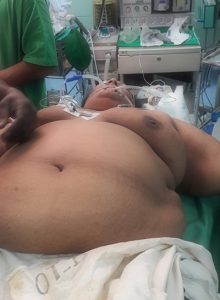
Over the past decade, our team has successfully performed nearly 400 operations, honing our expertise in handling patients with extreme weight. We have operated on numerous super obese individuals (BMI over 50), including those weighing over 200 kg, achieving excellent outcomes. With our upgraded operating theaters and advanced instruments, we are now equipped to safely operate on patients weighing up to 300 kg.
Childhood Obesity: Finding Effective Solutions
Childhood obesity is a pervasive issue affecting children across all social classes in Sri Lanka. When a child becomes morbidly obese and fails to lose weight, it significantly impacts their physical and mental development. These children often face bullying and isolation at school, which hinders their social skills and academic progress. Additionally, extreme weight prevents them from participating in sports and physical activities.

Certain childhood obesity syndromes contribute to severe weight gain, but even among these cases, carefully selected patients can benefit from weight loss surgery. For instance, we have successfully performed bariatric surgery on a 15-year-old with Prader-Willi syndrome, resulting in positive outcomes.
Obesity and Female Subfertility
New hope through bariatric surgery. Female obesity is a major contributing factor to subfertility among otherwise healthy young women. Remarkably, a mere 10% reduction in weight for a woman of childbearing age can double her chances of becoming pregnant. Every woman who underwent bariatric surgery with our team for this purpose has successfully achieved significant weight loss and subsequently became pregnant.
Overcoming Sleep Apnea: Alternatives to the CPAP Machine
Obesity Hypo-Ventilation Syndrome and obesity-associated obstructive sleep apnea (OSA) are debilitating conditions predominantly seen in obese men in our country. Often underdiagnosed, these conditions can lead to irreversible heart and lung damage due to prolonged high carbon dioxide levels in the blood. Many diagnosed patients are prescribed CPAP machines, but effective weight loss measures are rarely implemented.

Our studies have shown that all patients who underwent weight loss surgery and relied on CPAP machines for sleeping experienced a complete cure of their OSA. Remarkably, they were able to discontinue using the machine within six months of surgery.

In the News & Media

Stay informed with the latest news articles and media publications featuring our work and achievements in the field of bariatric and metabolic surgery. Explore how our innovative approaches and patient success stories are making headlines and gaining recognition in the medical community and beyond.

Checkout The Success Stories To Get Inspired

Discover the incredible journeys of our patients who have transformed their lives through bariatric and metabolic surgery. Their stories of success and newfound health will inspire and motivate you on your own path to wellness.

Scroll to Top